
When Liberia recorded its first case of COVID-19, the country’s health services were ready to confront this new health threat, having learned some very hard lessons from its experience with Ebola. The Ebola crisis of 2014-2016 was devastating in Liberia, bringing its fragile, underfunded, under-staffed, and by all measures, sub-par healthcare system to its knees. According to World Health Organization (WHO) data, by the end of the outbreak a total of 4,810 deaths were recorded out of 10,678 confirmed cases.
As a result of that experience, a plan was developed to battle any future outbreaks even with low budgetary support, said Dr. Francis Kateh, Liberia’s Deputy Health Minister and Chief Medical Officer.
Liberia recorded its first positive case of COVID-19 on March 16, 2020. To prevent the virus’s rapid spread, the Liberian government declared a “State of Emergency” on April 8, 2020 calling for the enforcement of a number of strict health protocols which included closing schools, nightclubs, cinemas, beaches, and places of worship. They also imposed restrictions on public gatherings of more than 10 people, limits of five customers to banks and restaurants, as well as social distancing, masking and other hygiene protocols. By June 2020, out of a total of 383 confirmed cases, there were 31 deaths.
Dr. Kateh said the country’s early planning and knowledge of the health protocols set Liberia apart from other countries. “This helped us to reduce the spread of the virus because Liberia was able to identify those infected and isolate them from others,” he said.
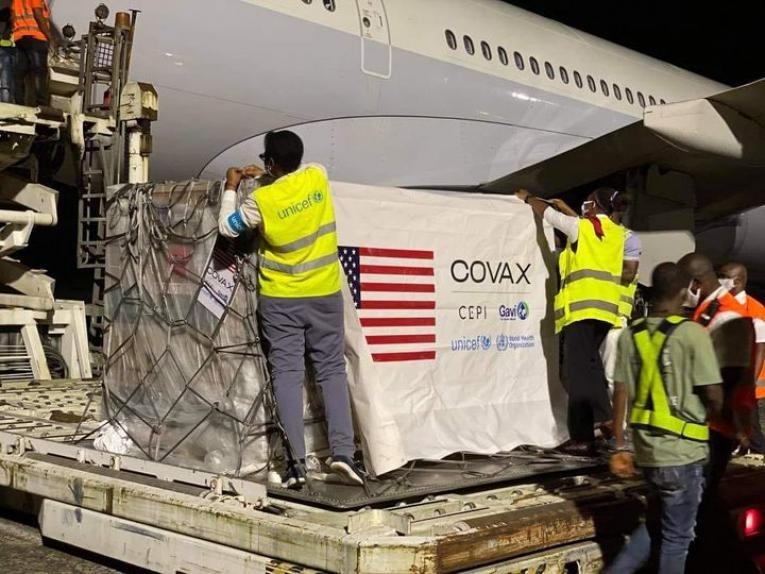
Once global supplies of COVID-19 vaccines became available, Liberia’s government launched a massive vaccination awareness and promotion program. Liberia received its first batch of vaccines, the AstraZeneca vaccine, in March 2021, which, eventually through donor partnerships, was augmented by the arrival of the Johnson & Johnson and Pfizer vaccines.
These vaccine donations boosted stocks and contributed to increasing Liberia’s immunization rates across the country’s 15 counties, including the rural areas, said Health Minister Dr. Wilhelmina Jallah.
Initially though, getting vaccines to citizens living in remote and hard-to-reach areas was a major challenge.
For example, in Grand Gedeh County, the vaccine was at first only available at health facilities in the main city, Zwedru, whereas in outlying communities in the county, access was more difficult due to the remoteness, whether there was a health facility or not.
Zwedru resident Robert Klay was at first hesitant to get vaccinated. His family was not persuaded to take the vaccine until his maternal aunt fell ill, he said.
“County officials encouraged us to get the vaccine, but we were afraid because of the information about the vaccine, but when my aunty became ill and was diagnosed with Covid-19, we were forced to go and get the Johnson & Johnson vaccine,” he continued.
Klay is now part of the County Health Team in Grand Gedeh County. For those living in smaller towns, Covid-19 vaccine is difficult as the roads are difficult and health facilities are not equipped to safeguard the vaccine for a protracted period, he said. Also, he said, because some health facilities are far away, residents are less likely to seek vaccinations.
In other places, community resistance initially kept people from getting vaccinated. For example, in Grand Cape Mount County, which is in the Western Region of Liberia, the vaccine introduction process was hampered by high levels of community resistance and hesitancy, as well as by erroneous information and a general lack of trust in public health interventions.
Kula Bonnah said initially his family thought the vaccine was harmful, so they decided not to take it.
“But, when my brother contracted the virus and I heard all the healthcare professionals saying that the COVID-19 vaccine was good for my family, I then thought to myself that the vaccine is good and advised my brother to take it or else he would die,” said Bonnah.
As a result, I pushed my family to get immunized, and now I can advise other Liberians to use the vaccine to stay protected, he said.
Mark Rogers, a reporter at Radio Cape Mount 102.4 FM, in Cape Mount County, who covered the outbreak, said the County Health Team was challenged in trying to get the vaccine to every part of the country despite the effort that was being made.
“The problem in some parts of the county was that the vaccine quantity was low and people who take the risk at times to walk for several hours to get the vaccine, only to get to the health facility and find they couldn’t get the shot,” he said.
This was definitely true in places like Jenneh, Manah, and Mano River, he said, adding that during the rainy season, the roads become inaccessible.
These were just some of the challenges that health care workers faced in trying to the vaccines to the populations.
In Maryland County, Cyrus Harmon, a clinician who works with the County Health team, recalled when the county reported its first COVID-19 case in April 2020.
“It was difficult, but with my experience from the Ebola outbreak, I was able to quickly set up the response team with support from WHO and Partners in Health, Harmon said.
“The outbreak was brought under control thanks to close collaboration with partners, local authorities, and community involvement. Despite the effort made, we launched COVID-19 vaccination in 2021, based on the experience gained over time and the system built. The team is still working with the community to ensure their safety,” he added.
Overall, Liberia’s vaccine rollout was successful, said Dr. Kateh, noting that public leaders, including the minister of health and lawmakers, were the first to take the vaccine.
“When the public saw us taking the vaccine, they were encouraged to take it as well,” Dr. Kateh said.
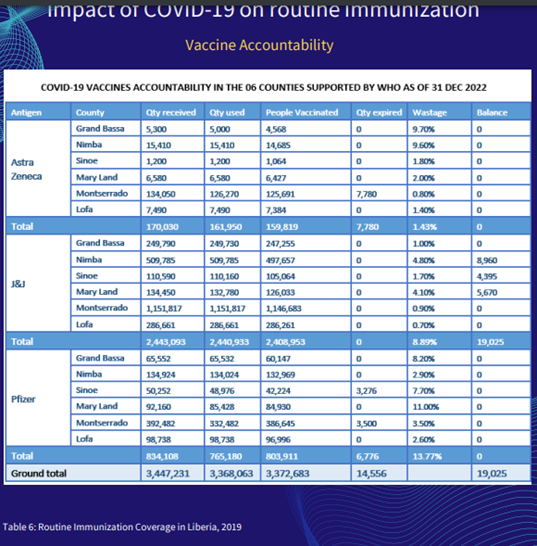
Gradually the country made significant strides in getting people vaccinated. According to WHO data, as of December 2022, more than 4 million doses of vaccine had been administered. To date Liberia has vaccinated approximately 81% of its population.
The preparedness in facing COVID-19 has also contributed to a stark difference in death rates in comparison to the Ebola period. As of June 2023, there were 8,090 confirmed COVID-19 cases and 294 deaths.